
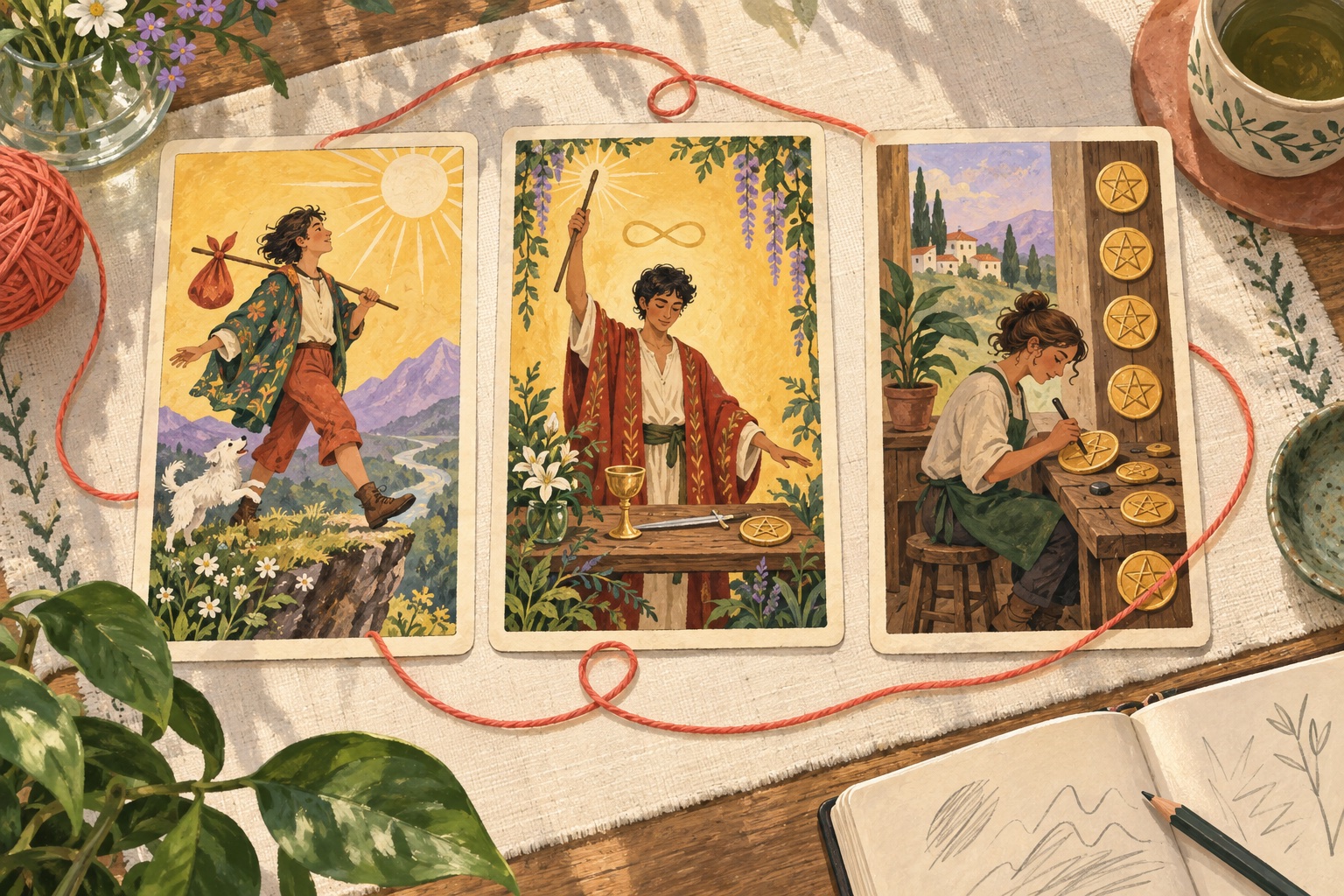
Choose a three-card layout for your question
These are alternative position schemes you can use with your own deck. Choose one before drawing; do not combine the positions from several layouts in the same reading.
Past → Present → Future
For exploring how a situation developed and where the current pattern might lead.
What brought me here, what is happening now, and what direction am I moving in?
Situation → Challenge → Next step
For a practical question where you want an action to consider.
What is happening, what needs attention, and what can I try?
Option A → Option B → What to consider
For comparing two choices without asking the cards to decide for you.
What might each option involve, and what factor am I overlooking?
My feelings → My needs → My next step
For reflecting on a relationship from your own perspective.
What am I feeling, what do I need, and how could I communicate it?
01
Start with a question
Before you turn over the cards, write down what you want to explore. “What could help me move forward with this project?” gives a three-card reading a clearer focus than a question with no context. Keep that question in view as you interpret each card.
02
Give each card a role
Choose the positions before drawing. For this example, use situation, challenge and next step. A card’s role matters: a card in the challenge position describes what needs attention, while the same card in the next-step position invites a different response.
03
Find the connecting thread
Look for an idea that moves across the cards. Does hesitation become action? Do several cards point to patience or practical effort? Notice similarities and tensions, then relate them to the original question. You do not need to force every symbol into the reading.
A worked example
“What could help me move forward with a creative project?”
The context: you have several ideas for a creative project, keep collecting tutorials and have not finished a first version. All three cards are upright. This is an illustrative scenario, not a documented client reading.
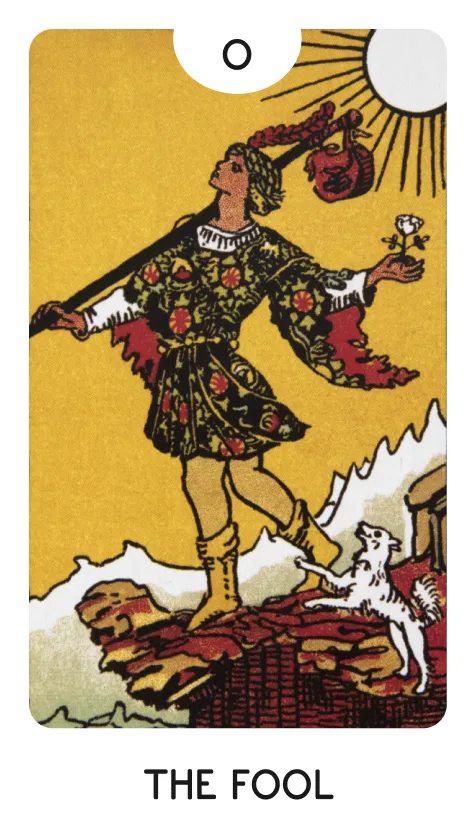 The situationThe Fool
The Fool fits the beginning: curiosity and willingness to try, without a finished plan. In the situation position, it describes where you are now; it does not automatically tell you to take a bigger risk.
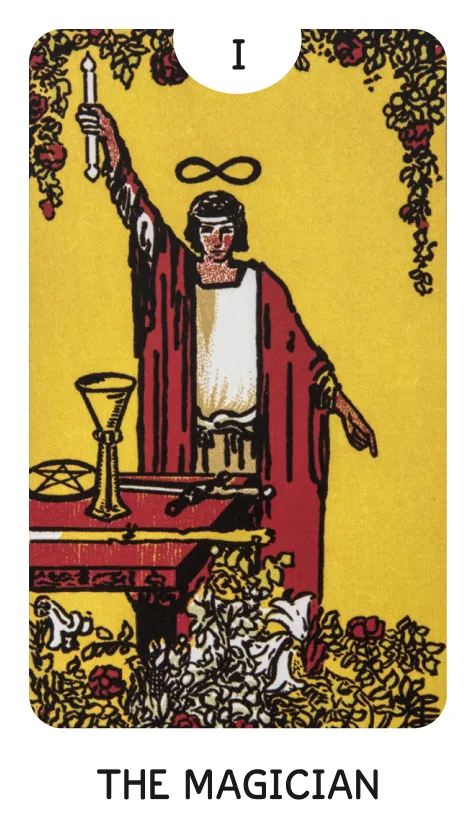 The challengeThe Magician
The Magician brings skill, tools and intention. In the challenge position, ask whether you are using what you already have or scattering attention across too many options. A challenge position does not make an upright card reversed.
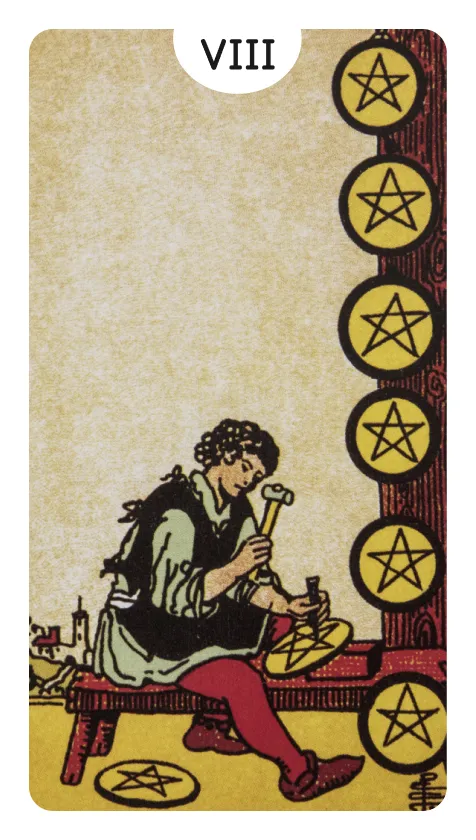 The next stepEight of Pentacles
The Eight of Pentacles turns the reading toward repeated, focused work. As a next step, choose one small deliverable and practise the skill it requires. This is an action you can test, rather than a promise of success.
Why these cards work together
The Fool begins; the Magician focuses available resources; the Eight of Pentacles develops skill through repetition. The thread is a movement from possibility to deliberate practice. The challenge modifies the beginning, and the final card gives that tension a practical response.
You are ready to explore a new idea, but your energy needs a clear direction. Choose one skill or task to work on consistently, so that enthusiasm becomes steady progress.One possible interpretation for these positions, not a fixed prediction.
Make it concrete
For this example: stop choosing between five ideas, pick one, and schedule three short sessions to create a rough first version. Review what you learned before expanding the project. The schedule is a suggested application of the reading, not a deadline predicted by the cards.
04
Read the whole story
Read your interpretation aloud as a short paragraph. Connect the cards with “but”, “because” or “so”. If the paragraph could describe any three cards, return to the positions and make the connection more specific.
Example: past, present and future
Use the same upright cards and the same creative-project question, but assign a timeline before drawing. This is an alternative reading, not a reason to change positions after seeing a result you dislike.
- Past
The Fool
You started with curiosity and little experience. Here the card describes an earlier beginning, rather than your next action.
- Present
The Magician
Your attention is now on choosing and using the skills and tools you have. In this position, the Magician describes a present resource rather than a challenge.
- Future
Eight of Pentacles
A possible direction is sustained practice and refinement. This is a theme to explore if the current approach continues, not proof that a particular outcome will happen.
You began by exploring, you are now learning to direct your resources, and continued practice could help you develop the idea. The useful question becomes: which skill is worth practising next?
What changed? The Magician moved from “what needs attention” to “what is available now”. The cards stayed the same; their assigned roles changed the story. A future position describes a possible direction, not a fixed deadline.
When the way you read the cards changes
All three cards are Major Arcana
You might explore the broader themes and choices before looking for a small action. This does not prove that an event is inevitable or unusually important. Return to the question and the three positions.
A suit or number repeats
Treat repetition as a clue, not an extra rule. Several Pentacles may invite a practical reading about resources or effort; several Cups may focus attention on feelings. Explain how that theme answers the question.
A court card appears
It can be read as a person, an attitude or a role. Test the interpretation against the context instead of assigning a stranger’s age, gender or intentions from the card alone.
The last card feels difficult
Do not erase it with extra draws until you get a reassuring answer. Ask what difficulty it highlights, what is within your control, and whether a practical change could address it.
Three meanings are not yet a reading
A list of meanings
“The Fool means beginnings, the Magician means skill, and the Eight of Pentacles means work.”
A connected interpretation
“You want to start, but your skills and tools need a single focus. A small, repeatable practice will help you turn the idea into something tangible.”
Three common mistakes in a three-card tarot reading
- Changing the positions after seeing the cards to obtain the answer you wanted. Choose a layout first and keep it consistent.
- Treating a challenging position as proof that a card has a negative meaning. Consider what the card asks you to examine in this specific context.
- Adding details the cards and question do not support, such as a guaranteed outcome or an exact date. Distinguish a reflective suggestion from a factual claim.
Questions about reading three tarot cards together
Does a three-card spread have to mean past, present and future?
No. That is one possible layout. Situation, challenge and next step is useful when you want to explore a decision. Write down your chosen positions before drawing.
What if the cards seem to contradict each other?
Keep the tension in the reading. One card may describe a desire while another shows a limitation. Ask how the third card responds to that contrast instead of forcing all three to agree.
How do I read reversed cards in a three-card spread?
If you use reversals, decide that before drawing. Consider the reversed meaning in relation to its position, then connect it to the other two cards. Reversed does not automatically mean “no”, and an obstacle position does not automatically mean reversed.
Should I draw a clarifying card?
First identify what is unclear: the card’s meaning, its position or the question. Revisit those three things. If you still use a clarifier, give it one specific question; do not keep drawing to replace an unwelcome answer.
Can three cards tell me what someone else thinks?
They cannot verify another person’s private thoughts. You can use the reading to examine your own impressions, needs and possible ways to communicate, then check assumptions in a real conversation.
What if I feel no connection between the cards?
Write one plain sentence for each position without trying to sound mystical. Connect two sentences first. If the third does not fit, leave the uncertainty visible rather than inventing a detail.
Try it with your own cards
Keep the question and positions visible. Write one sentence for each card, then bring them together in a single paragraph.
If you want a digital space to explore card meanings and spreads, you can also explore the Lumi app. Keep your question and chosen positions in mind so that the interpretation stays connected to your situation. Explore the Lumi app.
Explore more layouts in the library
Ready for more positions? These existing layouts use four or five cards, rather than three. Open one to check its positions before drawing.
Problem · 4 cards
Through the cards of the «Problem» spread, the influence of the past on the current matter is revealed, harbingers of its beginning, factors influencing the solution of the problem, and a forecast of the final result.
Finances · 4 cards
Through this Tarot spread, current financial problems are identified, tips for improving the financial situation are provided, mental blocks are identified, and a clear plan of action is offered to achieve stability and success in finances.
Future · 5 cards
Through this Tarot spread, the influence of past and recent events, current state, upcoming opportunities and long-term prospects are revealed, prompting how to act to achieve success.