The Emperor
The Emperor — Upright
The Emperor card in Tarot often symbolizes the materialization or visible outcomes of the Querent's efforts and plans. In personal or professional life, this card points to the successful manifestation of managerial and organizational abilities.
The Emperor is associated with insight and logic: if the Empress represents the power of love and the High Priestess embodies the strength of the subconscious, then the Emperor is linked to attentive observation and logical analysis of reality, leading to practical solutions.
When encountering this card in spreads, it is recommended for the Querent to utilize their analytical skills and prudence for successful problem-solving.
As a masculine signifier, the Emperor signifies qualities of leadership, emotional maturity, self-control, responsibility, and independence.
This card can also symbolize a person who has achieved success through their own efforts or is striving for complete autonomy.
The Emperor is also associated with the father figure, including the responsibilities and duties associated with the parental role, such as leadership, control, and decision-making. He takes pride in his achievements and strives to make the most effective use of his success.
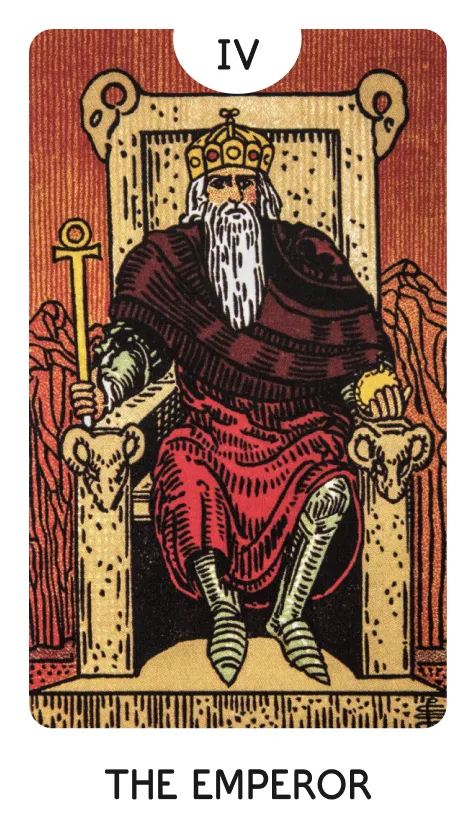
The throne upon which the Emperor sits symbolizes power and dominance achieved through significant efforts.

A meaning is only the beginning.
Explore what this card brings to your own question.
The Emperor — Reversed
When the Emperor card appears in a reversed position in Tarot, it typically symbolizes a period of inactivity and failure in the realization of plans. Planned projects either do not come to fruition or do not reach successful completion.
In such cases, the Querent may lack the determination to take responsibility or the ability to effectively plan and manage affairs.
The reversed Emperor can also indicate issues in relationships with authorities, whether it's a parent, spouse, or family head. This can include a lack of self-confidence leading to emotional difficulties.
Often, this situation leads to dependency and an unrealistic view of life, causing a person to avoid reality and feel disconnected from the world.
Characteristics of the reversed Emperor include imprudence, stubbornness without valid reasons, disorganization, and incompetence. The possibility of dependency, whether it's alcohol-related or otherwise, is not ruled out.
Astrology
The Emperor is linked to Aries, ruled by Mars, embodying leadership, structure, and willpower. This energy brings authority, control, and the drive to build solid foundations. It emphasizes discipline, strategy, and protective force.
Numerology
Number 4 symbolizes structure, authority, and stability. It reflects the essence of the card’s role in the journey, guiding insight through the lens of 4. The reduced number 4 brings focus to universal lessons and recurring themes.
Symbolism & Archetypes
Explore the symbolism — open a section to read more.
In Kabbalah, the Tarot card of the Emperor is associated with the Hebrew letter Hei (ה), which is linked to the first zodiac sign, Aries. Arthur Waite, in his card design, uses various elements to express this connection:
The traditional symbol of the zodiac sign Aries is the ram. Waite adorns the Emperor's throne with four ram's heads, clearly establishing a connection to the sign of Aries.
The depiction of the ram's head is also noticeable on the Emperor's left shoulder, reinforcing the association with the zodiac sign.
Each zodiac sign is associated with a specific part of the human body, and Aries is linked to the head. Therefore, Waite crowns the Emperor's head with a helmet adorned with the symbol of Aries.
The dominance of the color red in the card's symbolism corresponds to the color palette of Aries and Mars, the planetary ruler of Aries in the Golden Dawn system.
The yellow and orange colors on the card correspond to the sixth Sephirah and the Path of the Sun (the Sun is exalted in Aries).
Waite consciously incorporates zodiac symbolism into this arcane, as in his revised secret order of the Tarot, the Emperor is the first card corresponding to a zodiac sign, unlike the Hierophant in the French Tarot.
This is emphasized by clear and unambiguous symbols integrated into the card's design.
The Emperor card in Tarot represents the image of a king, a powerful ruler, or a general, symbolizing authority and leadership. He is associated with the ancient Roman god Mars, the embodiment of a great warrior whose history is filled with numerous battles and victories.
This card reflects the side of our soul that stands firm, displays determination, and exercises control over one's destiny. It symbolizes inner strength and confidence in decision-making, as well as the ability to manage and steer one's life path.
In the Tarot card of the Emperor, he is depicted as a majestic monarch with a scepter in the form of the Crux ansata (ankh cross) in one hand and an orb in the other. He sits on a throne adorned with ram's heads, emphasizing his authoritative and majestic presence.
The Emperor symbolizes power, authority, and dominion on a worldly scale, possessing the highest natural attributes of authority. Sometimes he is depicted sitting on a cubic stone, which can introduce some confusion into his symbolism.
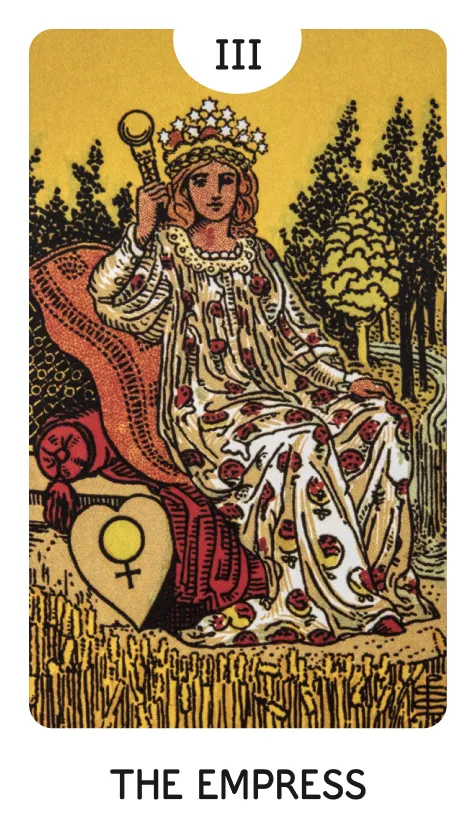
The Emperor represents masculine strength and power, finding a counterpart in the Empress card, symbolizing one who seeks to unveil the Veil of Isis, although it remains inviolable.
Despite the fact that the Emperor card, together with the Empress card, can suggest a marital connection, their meanings extend beyond literal matrimony. They not only represent an earthly royal couple but also indicate a higher presence.
In particular, the Emperor symbolizes the highest royal majesty, occupying the throne of the mind, where he rules over thoughts, rather than the sensory world.
Both characters, each in their own way, possess wondrous experience, but their wisdom originates from higher realms and is not always fully conscious.
The Emperor is sometimes described as the embodiment of will, which is just one aspect of his symbolism, and as an expression of potentials emanating from the Absolute Being, although this may be seen as more of a fantasy.
The Emperor card in Tarot reflects the physical reality of the world in its material aspect. The number of this card, IV (4), is associated with the square, symbolizing order and structure in the material expression of the universe.
This card embodies the concept of specific reality and the formation of goals and ideas in the process of their realization. Various symbols on the card suggest that something has taken on specific outlines or has reached the stage of implementation.
The Emperor is associated with the astrological sign of Aries, which symbolizes spring renewal and growth, a period of active external influence, and the beginning of new ventures. The appearance of this male character in the deck symbolizes the organizing principle of conscious thought over matter.
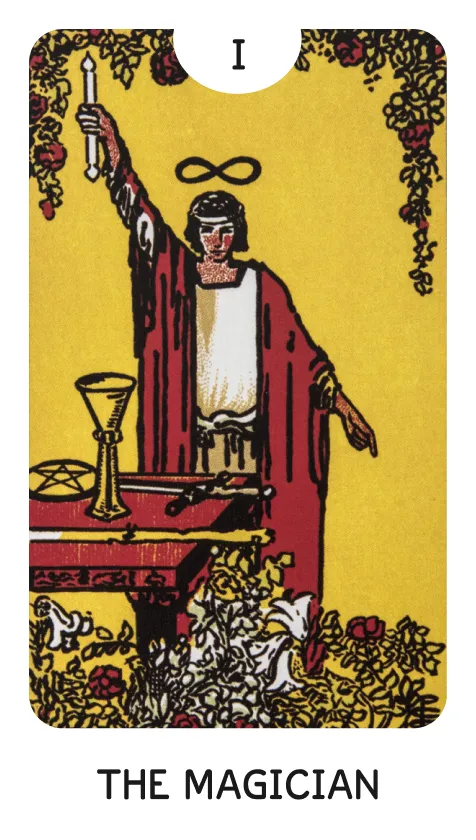
The Magician, represented as a youth, now transforms into a mature man, symbolizing maturity and the achievement of the Querent's plans or goals.
The predominant red color on the card emphasizes energy, passion, and the drive to take action, expressing determination and aggression. This indicates that the individual puts in all their efforts to achieve their goal or desired outcome and ultimately succeeds.
The mountains in the background of the card symbolize something solid and enduring, once again highlighting full dedication to the chosen endeavor.
Keep exploring
All 78 cards →
A READING THAT FEELS LIKE YOU
Your cards.Your kind of clarity.
Go beyond a card meaning. Explore personal tarot readings, choose your reader and keep the conversation going in Lumi.
Your next reading is a download away.